The Future is Now: 7 Event Tech Trends Reshaping Our Industry in 2026

The Future is Now: 7 Event Tech Trends Reshaping Our Industry in 2026
The events industry is moving faster than ever. Technology isn’t just enhancing experiences anymore. It’s fundamentally transforming how we think about engagement, accessibility, and impact.
Here’s what’s actually happening in 2026:
SMART ACCESS IS BECOMING THE STANDARD
What’s Changing
Facial recognition and biometric check-ins are reducing entry friction from 3-5 minutes per attendee to under 30 seconds
Smart ticketing systems now integrate with venue management, creating real-time attendance tracking
VIP experiences can be personalized instantly based on recognized attendee data
Security is strengthened without sacrificing attendee experience
Why It Matters
First impressions determine event success. When attendees experience frictionless entry, they’re already primed for engagement. Plus, the data you capture at entry becomes invaluable for post-event personalization
Real Impact: Events using smart access report 40% faster entry times and improved attendee satisfaction scores.
IMMERSIVE EXPERIENCES ARE NO LONGER EXPERIMENTAL
What’s Changing
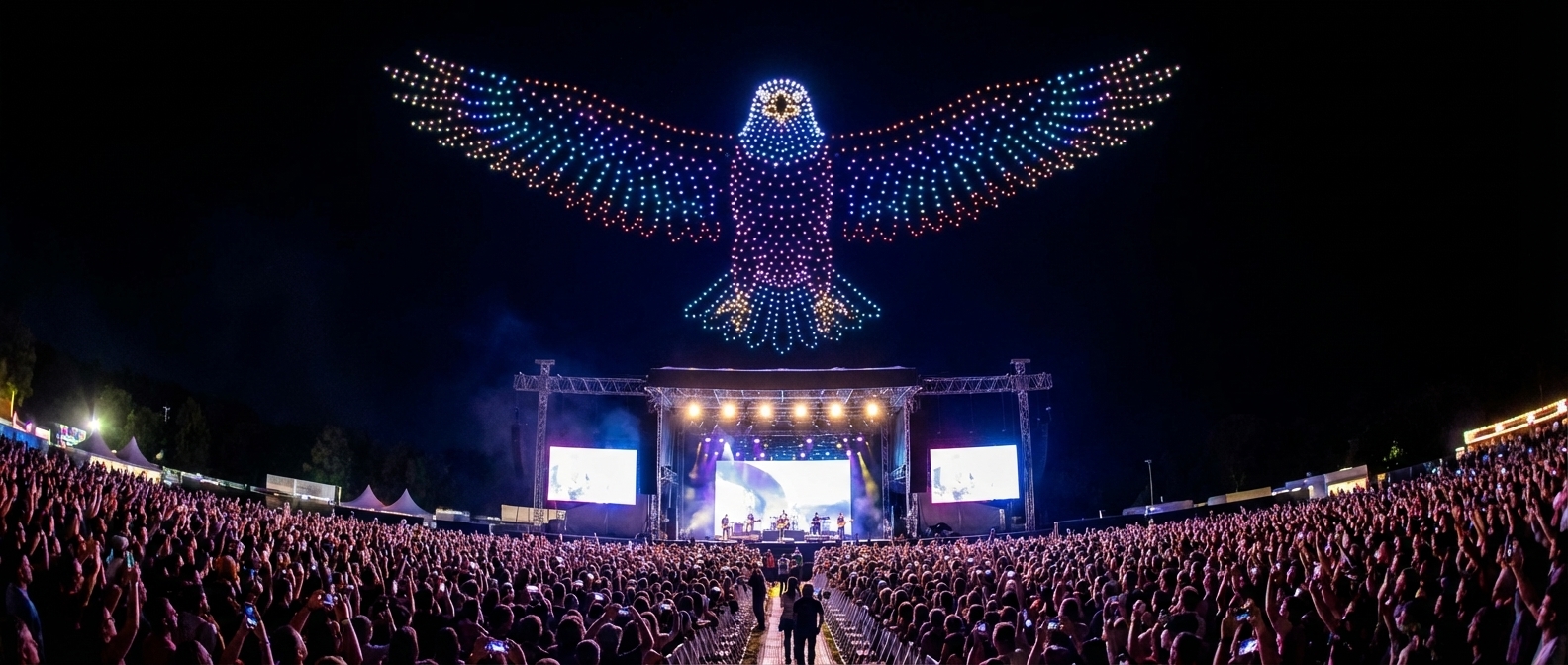
Drone light shows are becoming affordable enough for mid-sized events (not just major festivals)
3D projection technology transforms ordinary spaces into branded environments
Immersive LED displays create “wow moments” that attendees actually want to share on social
Virtual reality experiences are moving beyond novelty into genuine engagement tools
Augmented reality is blending physical and digital seamlessly
Why It Matters
Attendee attention spans are shrinking. Brands that create genuinely immersive moments cut through the noise. These aren’t distractions. They’re the core of the event experience.
Strategic Application: The best events don’t add technology for technology’s sake. They use immersive tech to reinforce their core message. A tech conference uses projection to showcase product innovations. A wellness event uses AR for interactive health education.
SUSTAINABILITY ISN’T OPTIONAL. IT’S EXPECTED
What’s Changing
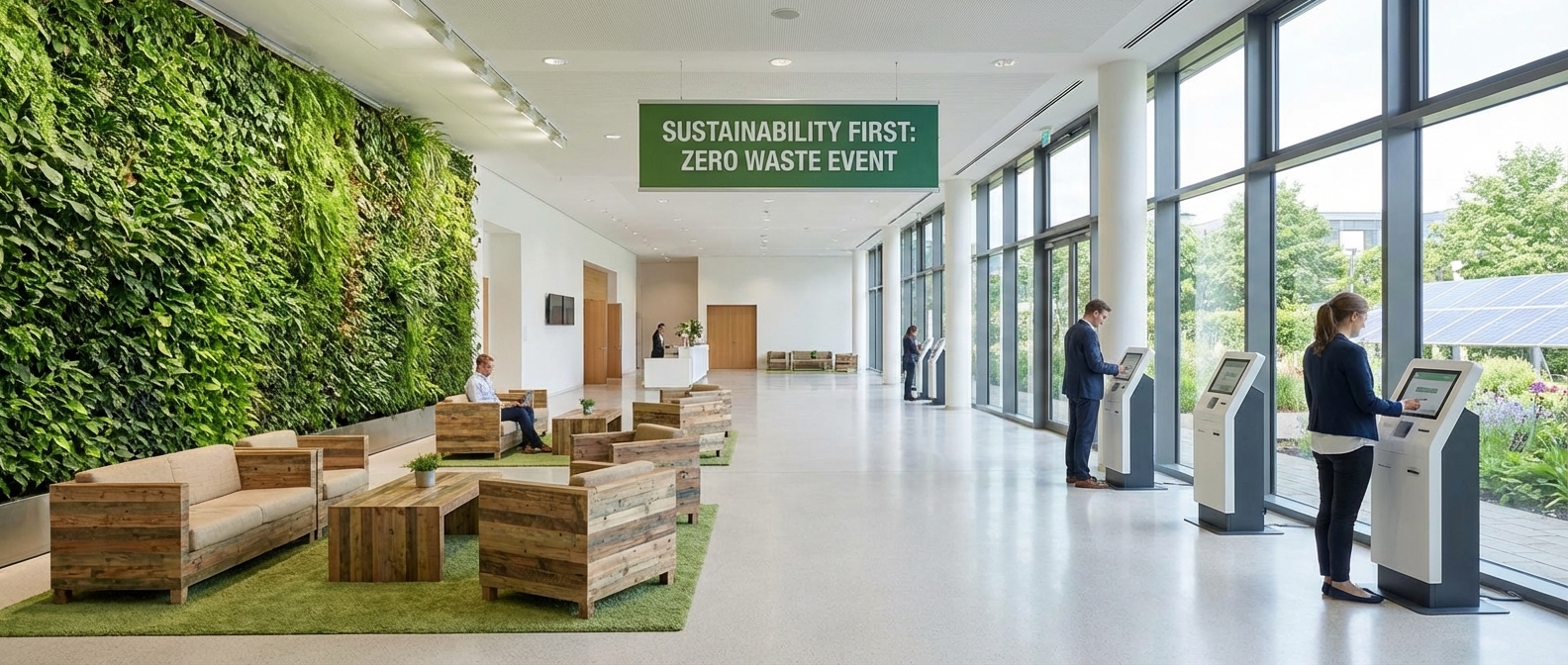
Digital-first event management is eliminating printed materials without sacrificing functionality
Sustainable venue technology (energy-efficient HVAC, LED lighting) is becoming standard
Carbon tracking tools now calculate and offset event emissions automatically
Supplier networks are shifting toward eco-conscious vendors
Attendees expect transparent sustainability reporting (and they’ll call you out on greenwashing)
Why It Matters
This isn’t just morality. It’s business. Events that prioritize sustainability report:
Higher attendee satisfaction
Better brand loyalty
Easier sponsorship sales (corporate sustainability requirements)
Reduced operational costs
The Competitive Advantage: Your competitor is probably not talking about sustainability. That’s your differentiator.
 GLOBAL EVENTS NEED GLOBAL COMMUNICATION
 GLOBAL EVENTS NEED GLOBAL COMMUNICATION
What’s Changing
AI-powered real-time translation is reaching 95%+ accuracy (not perfect, but functional)
Interpretation equipment has become wireless and app-based (goodbye bulky headsets)
Multi-language simultaneous interpretation is now accessible even for small regional events
Content accessibility (captions, transcripts, sign language interpretation) is becoming standard
Global attendee networks are creating new revenue streams through international sponsorships
Why It Matters
Language shouldn’t be a barrier to inclusion. When you remove it, you’re not just being inclusive. You’re expanding your market. A 500-person local event can become a 5,000-person global event.
The ROI: One international sponsorship deal often covers the entire cost of interpretation infrastructure.
DATA DRIVES SMARTER DECISIONS
What’s Changing
Event analytics tools now track attendee behavior in real-time (booth engagement, session attendance, networking patterns)
Predictive analytics can forecast which sessions will be most popular before the event starts
Post-event data analysis reveals what actually drove ROI (often surprising the organizers)
Integration with CRM systems means event data flows directly into sales and marketing workflows
Attribution modeling finally answers: “Which speakers, sessions, or experiences actually drove business results?”
Why It Matters
You’re spending massive budgets on events without truly knowing ROI. Smart organizations are:
Using heat mapping to understand attendee flow and optimize booth placement
Analyzing engagement patterns to improve future event design
Connecting event attendance to downstream sales (proving business value)
Personalizing follow-ups based on observed behavior during the event
The Game-Changer: The events that use data to iterate and improve their next event will dominate.
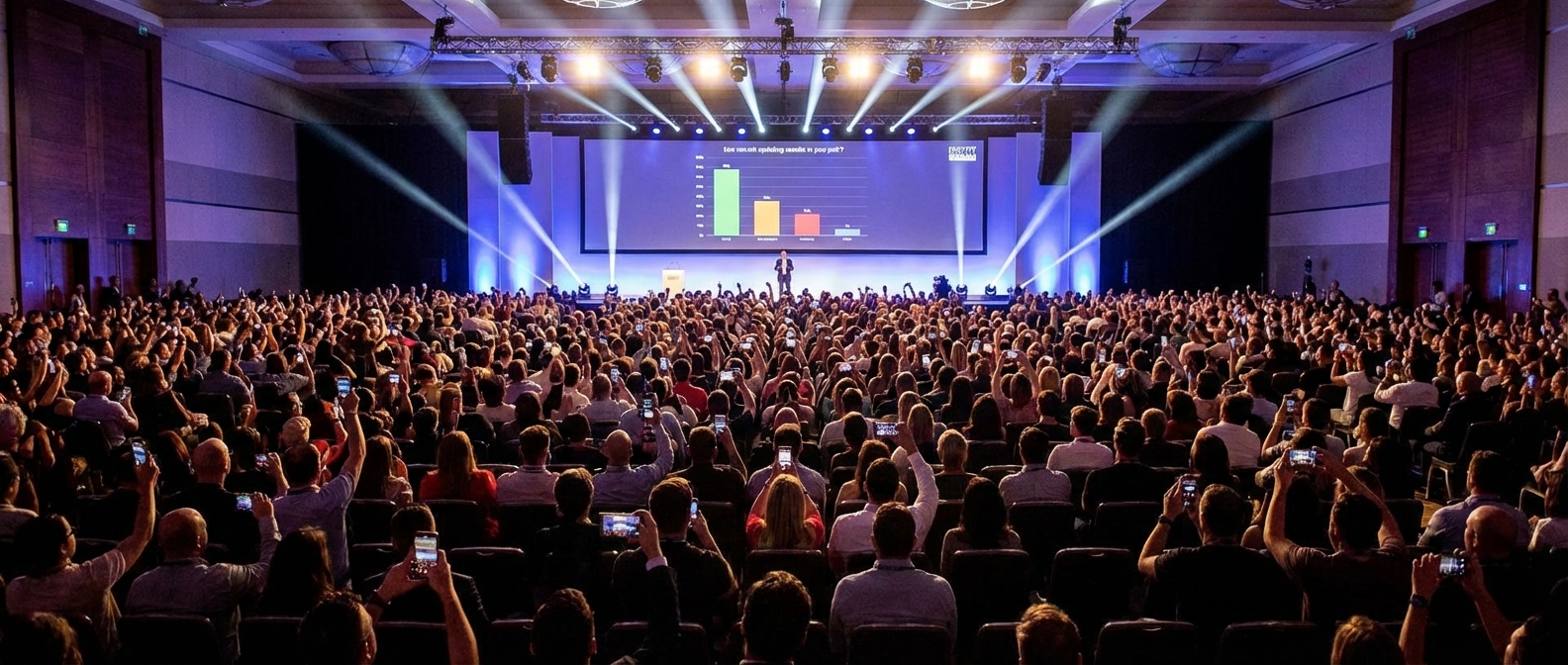
AUDIENCE ENGAGEMENT IS INTERACTIVE, NOT PASSIVE
What’s Changing
Event apps with gamification (points, badges, leaderboards) drive real engagement
Beacon technology and proximity marketing enable spontaneous networking and personalized recommendations
Live polling and interactive Q&A create real-time dialogue instead of monologue
Mobile-first networking tools match attendees based on shared interests (AI-powered)
Streaming and on-demand content extend the event beyond the physical date
Why It Matters
Engagement equals retention equals ROI. Events that treat attendees as active participants rather than passive listeners report:
3x higher networking connections
Better session attendance (people actually show up)
Stronger post-event advocacy
Higher likelihood of returning next year
Practical Application: A major conference might use mobile app gamification to drive booth visits. A networking event might use AI matching to connect people with complementary skills. A trade show might use live polls to educate and engage simultaneously.
SCALABILITY THROUGH AUDIO-VISUAL PRODUCTION
What’s Changing
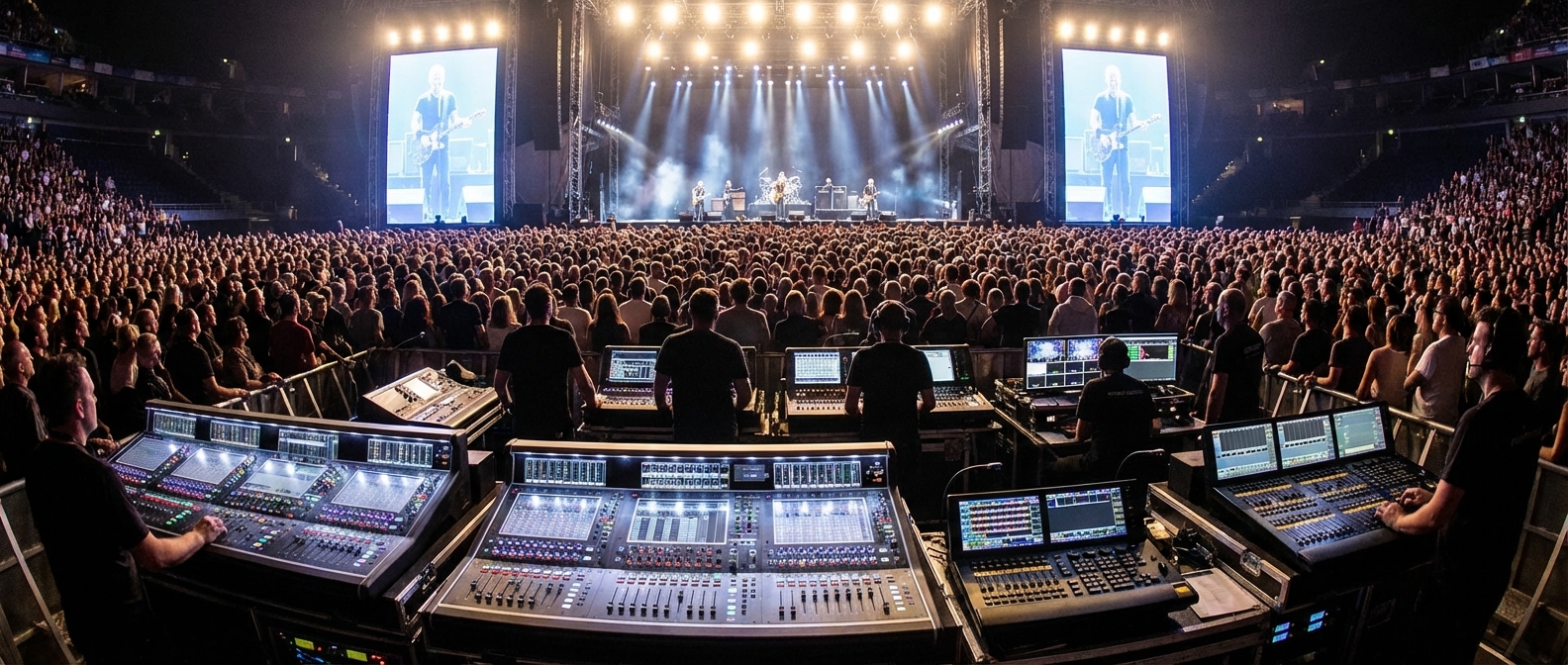
Tour guide systems and multi-channel audio now scale seamlessly from 50 to 50,000 attendees
Portable PA systems and wireless technology have eliminated the need for massive physical infrastructure
Virtual AGM and hybrid event platforms mean you can scale without scaling your venue
LED display technology has become affordable for mid-sized events
Professional video production and live streaming have become the standard expectation
Why It Matters
Scalability equals sustainability. The events that can handle 200 people OR 5,000 without missing a beat have a massive business advantage.
THE BIG PICTURE
All seven of these trends share one underlying principle: Attendee experience is now non-negotiable.
The events that win in 2026 are not the ones with the most expensive tech. They’re the ones that:
- Understand their audience deeply
- Invest in technology strategically (not just because it’s cool)
- Measure what matters (engagement, not just attendance)
- Create seamless, frictionless experiences
- Use data to continuously improve
- Prioritize inclusion and accessibility
- Tell a coherent story through every touchpoint
The Competitive Reality
Your competitor isn’t just another event in your category.
Your competitor is every other experience competing for your attendee’s time and attention. Netflix. TikTok. Instagram. Gaming. Streaming concerts. If your event doesn’t deliver an experience that stands out, you’re losing the audience battle.
Investment Priority Strategy for 2026
- Data & Analytics First: Understand what’s actually working before investing in flashy tools
- Attendee Experience Infrastructure: Smart access, reliable WiFi, mobile-first apps
- Engagement Technologies: Beacons, interactive tools, gamification
- Immersive Experiences: Drones, projection, VR/AR (after you’ve nailed the basics)
- Sustainability Systems: Build this into every decision, not as an add-on
Of these 7 trends, which ones are already embedded in your event strategy? And more importantly, which gaps are you going to address in the next 12 months?
The organizations that move strategically, not reactively, will own their category by 2027.
httpstreefanevents.comAI